The coco de mer seed: a unique botanical treasure

An icon of the Seychelles and an extraordinary botanical curiosity, the coco-de-mer seed, from the Lodoicea maldivica palm, fascinates botanists as much as collectors, museums, interior designers, and art object boutiques. Known the world over for its callipygian silhouette evocative of human buttocks, it is above all renowned for being the largest seed ever produced by a plant.
Caught between being an endemic species, a monumental nut, and a symbol of preserved islands, the coco-de-mer possesses all the attributes of an exceptional piece : a specific origin, limited cultivation, an almost mythical aura, and strong decorative appeal.
The coco-de-mer: a giant seed from the Seychelles
The coco-de-mer comes from a unique palm, the sea coconut (Lodoicea maldivica), an endemic species of the Seychelles that grows naturally on two granitic islands, Praslin (notably the Vallée de Mai, a UNESCO World Heritage site) and Curieuse. The plant is dioecious, slow-growing, and produces only a few fruits per palm each year, with females bearing a few seeds at various stages of maturation. A recent census led by the Seychelles Islands Foundation reports about 5,800 monitored sea coconut palms, confirming concentrated stands and sparse fruiting.
Iconic dimensions (order of magnitude):
-
Average weight of the seed: up to 40 kg, but averaging between 15 and 20 kg.
-
Maximum length: up to 50 cm for the bilobed seed.
-
Typical width/diameter: 28–30 cm on average.
The Lodoicea seed is therefore, by far, the largest seed in the world in both mass and dimensions.
💡Good to know: despite common usage, the coco-de-mer is not the "fruit" in the "edible" sense of the sea coconut, but its bilobed seed. The fruit corresponds to the large drupe that envelops it and takes several years to ripen.
Why is this seed nicknamed “coco-fesses” (buttock coconut)?
The nickname stems from a visual observation: the bilobed seed clearly resembles human buttocks. This analogy was established very early on in French by the adjective "callipyge" (callipygian), borrowed from the ancient Greek καλλίπυγος (kallípugos), literally “with beautiful buttocks,” formed from κάλλος (kállos, “beauty”) + πυγή (pugḗ, “buttock”). The term has been attested in French since the 18th century and popularized by the Venus Callipyge.
It therefore served as a historical scientific epithet for the species, formerly cited as Lodoicea callipyge. Hence the common use of “coco-fesses” to refer to the Seychellois seed whose shape has made it famous.
Why is this seed so rare?
The coco-de-mer seed is endemic to the Seychelles and grows naturally only on Praslin (notably the Vallée de Mai) and Curieuse. Its very restricted range, combined with strict environmental protection, explains much of its rarity.
Several biological and ecological factors add to this:
-
Extremely slow cycle: the fruit takes on average 6 to 10 years to ripen, then the seed can take up to 2 years to germinate. Annual production per palm therefore remains low.
-
Dioecious species and limited population: since males and females are on separate individuals, pollination and fruiting depend on concentrated, sparse populations. Field surveys show only a few thousand trees.
-
Habitat requirements: this palm thrives in the specific microclimatic conditions of the Seychelles' granitic forests, which are difficult to replicate in greenhouses due to the cultivation duration, the needs for heat and humidity, and the slow growth of giant palms.
➜ Result: even with active conservation, the coco-de-mer remains a rare species with limited recruitment and strictly regulated trade, which keeps the seed in the category of exceptional botanical pieces.
Does a coco-de-mer seed keep well?

Yes. A properly prepared and stabilized coco-de-mer seed (Lodoicea maldivica) can be kept for several years, even decades, without losing its iconic look, provided a reliable indoor environment is maintained. Legally marketed specimens are non-viable (degerminated), well-dried, and sometimes polished, which limits the risks of internal rancidity and mold development.
To follow for proper preservation:
-
Stable temperature: ideally 18–22 °C, away from heat sources (radiators, fireplaces, spotlighted cabinets).
-
Controlled relative humidity: aim for 45–55% RH to avoid cracking (air too dry) or mold (air too humid).
-
Light: no direct sunlight; prefer diffused, non-UV lighting.
-
Adapted support: a display stand that distributes the weight on the widest part of the nut, without pressure points (discussed later in the article).
-
Dust and deposits: dry dusting with a microfiber cloth; strictly avoid oils, colored waxes, and solvents.
-
Shocks and handling: limit rotation and avoid prolonged contact with abrasive surfaces.
-
Monitoring: periodically inspect the appearance of the shell (cracks, spots), the smell (a sign of moisture), and the inside if the piece is hollow.
In a temperate and stable interior, a well-prepared seed lasts for a long time and keeps its appearance for decades. This longevity as an exhibitable botanical object, combined with very low natural production and a strict regulatory framework, contributes directly to the rarity and value of the pieces.
The coco-de-mer: an endangered seed
The coco-de-mer was long poached for its alleged aphrodisiac virtues and its extraordinary appearance. To curb the pressure, authorities have hardened the framework: it is forbidden to bring them back from travel without official documents, and the trade is regulated.
How to recognize a legal piece:
-
Light green stamp attached to the nut certifying controlled origin.
-
Numbering and traceability associated with the seed (provenance, year, status).
-
Documents provided upon purchase: proofs of origin, export and ownership details.
-
Sale via authorized boutique or recognized auction house, never as an untraced “souvenir.”
Auctions remain possible for raw, carved, or polished specimens, notably at Drouot, Christie’s, Artcurial, or Bonhams, where the ownership history and compliance of documents are carefully examined. Outside these channels, prefer a clear offer in a specialized boutique with advice on conservation.
How to display your coco-de-mer seed?
Displaying a coco-de-mer requires a precise stand to secure the piece and reveal its bilobed silhouette without stress points. This is exactly the role of the display stand developed by La Bulle: a steel support designed to fit the geometry of the seed at its widest part and stabilize the whole without masking the shape. The device is articulated around a discreet base and two adjustable support arms.
Before manufacturing, you send us the dimensions of your seed (length, width, circumference at the widest point) so that we can pre-calibrate the support.
Upon receipt, a simple final adjustment allows for optimizing the support and the display angle, whether the piece is raw, polished, or carved. The result: a safe, legible, and elegant presentation, ready for a boutique display case, a cabinet of curiosities, or a living room.

The features of our display stand for sea coconut
Designed for a clean and safe showcase, without marking the shell:
-
Material: formable steel, rigid and adjustable by hand
-
Manufacturing: made in France, softened finishes
-
Bases available: square 15 × 15 cm or rectangular 15 × 12 cm (choice depending on seed dimensions)
-
Architecture: two support arms + one vertical central rod
-
Central rod: round wire Ø 10 mm
-
Support rod: Ø 6 mm, positioned 3 to 5 cm below the widest point to lock the seat
-
Final adjustment: simple shaping to distribute the weight and prevent any slipping
💡Good to know: at La Bulle, we design display stands to showcase a wide variety of collectibles, works of art, and exceptional pieces. You will thus find stands adapted to books, collectible knives, fossils, masks, fans, porcelain plates, minerals, collectible eggs, and many other objects. For pieces with atypical dimensions or requiring specific presentation, we also create custom-made stands and displays. Our goal is always the same: to offer a perfectly adapted solution to ensure a presentation that is elegant, stable, and discreet.
What is the price of a coco-de-mer?
Expect a few hundred euros for a basic certified seed (small size, standard condition), typically 300 to 800 €. Beautiful, well-preserved, and large specimens are usually between 1,000 and 2,500 €. In auctions, certain singular pieces (provenance, rarity, polished or carved work) can exceed 3,000 to 5,000 €, and records sometimes cross the 5,000 - 10,000 € mark.
TO DISCOVER ON THE BLOG

How to display a painting? A complete guide for optimal presentation

The Fontainebleau Gogottes: History of a Natural Work of Art
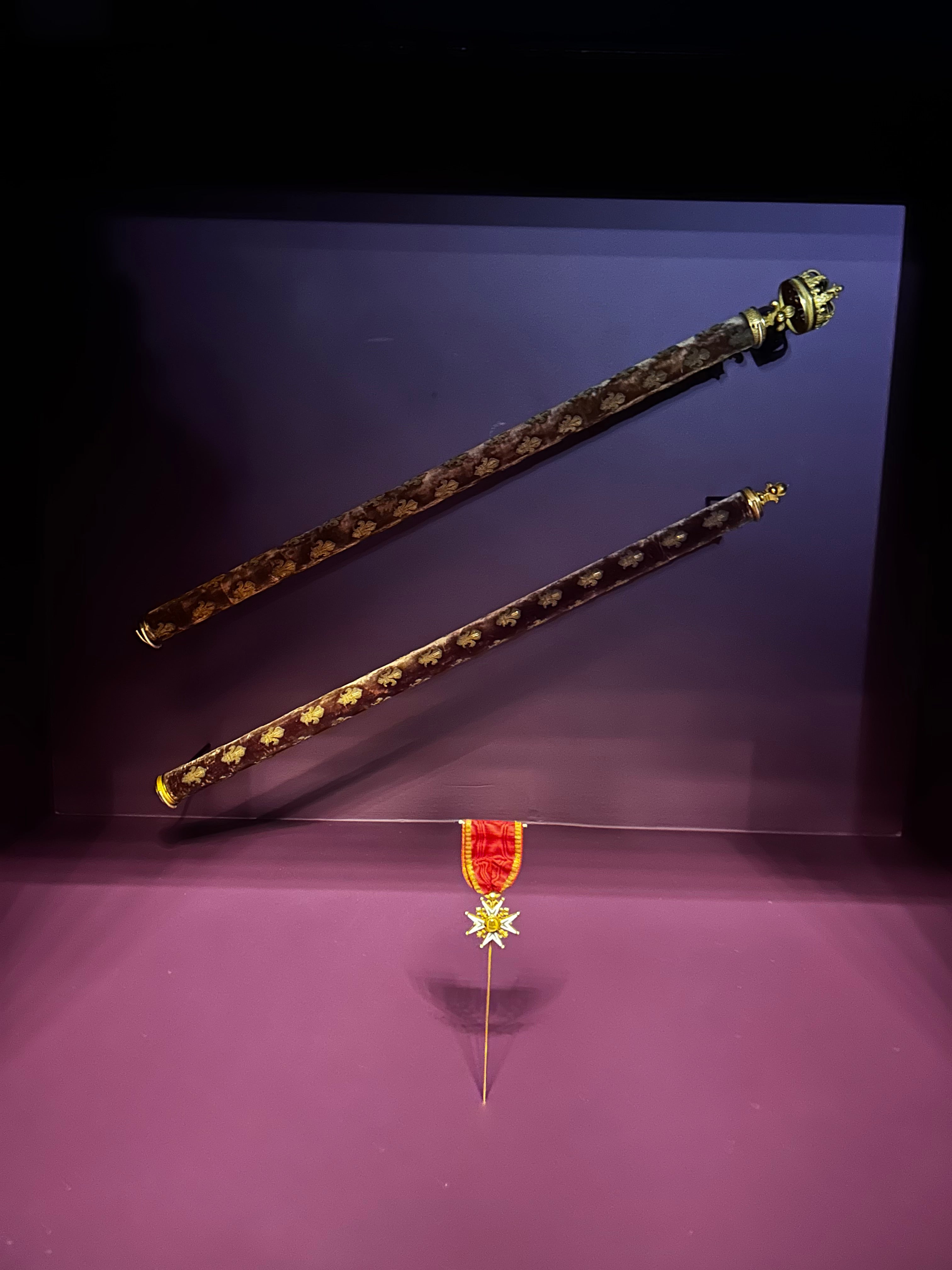
Creation of custom plinths for the "Le Dernier Sacre" exhibition at the Galerie des Gobelins